
FROM INQUIRY TO HANDOVER
How Our RV Buying Process Works
Nationwide RV buying in all 50 states
No obligation to accept an offer
Free towing with an agreed purchase
Start With What You Know About Your RV
The first step is to describe the RV you’re considering selling. You don’t need a detailed classified ad or a complete history of every component. Start with the information you have and be straightforward about anything you’re unsure of.
These four groups of details are particularly helpful.

RV Identification
Provide the RV type, year, make, and model. Include the floorplan or model designation if you know it. For a motorhome, mileage may help explain its usage. For a towable RV, the trailer’s configuration and equipment can be relevant.
Condition and Known Problems
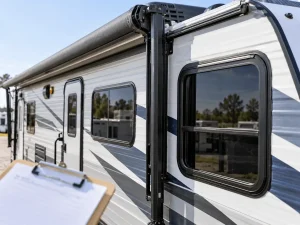
Describe whether the RV operates normally, requires repairs, or has been sitting unused. Mention known engine or transmission problems, roof leaks, water intrusion, soft flooring, slide-out issues, missing equipment, or other concerns. You do not need to diagnose a problem you haven’t investigated.
Location and Accessibility
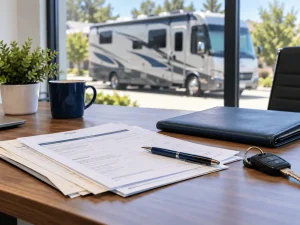
Provide the ZIP code where the RV is currently located. If it is stored at a campground, dealership, storage facility, or another property, mention that when discussing collection. An RV’s location and accessibility can affect how an agreed purchase is completed.

Ownership Information
Indicate whether you have a title, whether the RV is financed, and whether there are any known ownership complications. You can begin an inquiry even if you have questions about the paperwork. Those issues will need to be reviewed before a purchase can be finalized.
If available, recent photographs of the RV’s exterior, interior, and problem areas can provide additional context. The Value My RV form lets you begin with the details you know.
What Happens From Your Inquiry to an RV Handover?
QuickRVBuyer’s buying process starts with your RV information and an individual evaluation. If an offer is available, you decide whether to proceed. Ownership, payment, and pickup arrangements are then addressed as part of an agreed purchase.
The important distinction is that asking about a sale, receiving an offer, and completing a sale are separate events.
01
Step 1: Send the RV Details
Use our online form to explain what you want to sell and where it is located.
Include the information you know about the RV’s model, operating condition, and any major problems. If a travel trailer has been in storage for three years, say so. If a Class C motorhome runs but has a roof leak, describe both facts.
The purpose of this first step is to provide a useful starting point for evaluating the vehicle, not to commit you to a sale.
02
Step 2: Clarify Anything That Could Affect the Evaluation
The information submitted is reviewed to understand the RV and its circumstances.
Not every submission will answer every relevant question. Follow-up information may be needed about condition, ownership, equipment, or location.
For example, a report of water damage may need more explanation than a photograph of a stained ceiling. A non-running motorhome may require clarification about whether it rolls, steers, and can be accessed for transportation.
Providing accurate details early helps make the discussion about a possible purchase more productive.
03
Step 3: Understand the Proposed Offer
If QuickRVBuyer can make an offer, review the proposed amount and the terms attached to it.
Confirm whether any additional condition verification or documentation is required before the amount can be finalized. A proposed purchase amount should not be confused with a completed transaction.
This is also the appropriate point to ask questions about the RV’s condition, a lender’s involvement, or how the vehicle would be collected.
You should understand what is being proposed before deciding whether to sell.
04
Step 4: Make Your Decision
You are not required to accept an offer from QuickRVBuyer.
You can consider whether the proposal works for your situation. An owner with a financed fifth wheel may need to compare the offer with the loan payoff. Someone with an older motorhome might consider the cost of repairs or continued storage.
An inquiry alone does not transfer ownership. Neither does the evaluation itself.
If you choose not to accept the proposed terms, you do not have to proceed with the purchase.
05
Step 5: Address the Purchase Details
If you choose to move forward and both sides agree on the purchase terms, the remaining transaction details must be confirmed.
These may include the legal ownership records, any existing lien, the agreed purchase amount, payment arrangements, and documents required by the applicable state.
The exact requirements depend on the vehicle and its circumstances. A jointly owned RV may involve different signatures from an RV with one recorded owner. A financed unit may require lender coordination.
Before signing or handing over the vehicle, understand the agreed payment method, timing, and ownership-transfer process.
06
Step 6: Prepare for the Agreed Pickup and Handover
Free towing is included with an agreed QuickRVBuyer purchase.
Once a purchase has been agreed upon, collection requirements can be coordinated around the RV’s location and condition.
A drivable camper van in an open driveway has different access needs from a fifth wheel behind a storage gate or a motorhome with flat tires.
Tell us about anything that could affect access or movement. Remove your personal belongings, confirm which items are included in the sale, and make sure the payment and paperwork arrangements are understood before the handover.
The transaction is complete when the agreed purchase, payment, ownership, and possession requirements have been fulfilled.
Different RVs Raise Different Evaluation Questions
A useful RV evaluation looks beyond the year and model. The questions depend on the type of vehicle and the problems being reported.
Motorhomes and Camper Vans
For Class A, Class B, and Class C motorhomes, the engine, transmission, mileage, and operating condition may be important. An owner might report that the engine starts but the transmission slips, or that the vehicle drives normally while the generator and air-conditioning system need work. These are different conditions and should be described separately.
Travel Trailers, Fifth Wheels, and Other Towables
Travel trailers, fifth wheels, toy haulers, pop-up campers, and truck campers have their own considerations. Roof condition, slide-outs, flooring, axles, tires, hitch components, and interior equipment may be relevant. A towable RV may be in otherwise usable condition but have a transportation issue that needs to be understood. The more accurately you describe the unit, the easier it is to assess the relevant circumstances.
Stored, Damaged, or Non-Running RVs
RVs that need repairs, have been stored for an extended period, or no longer operate can still be submitted for evaluation. Mention known water damage, structural problems, missing components, mechanical failures, or periods of prolonged storage. If you don’t know whether a system works, identify it as untested rather than describing it as functional. QuickRVBuyer considers RVs of different ages and conditions, but every inquiry is reviewed individually. Not every vehicle will qualify for a purchase offer. Most inquiries come from private owners. Dealerships with individual RVs or inventory questions may also contact QuickRVBuyer.
What Should You Check Before Agreeing to Sell?
An offer should be considered as a complete proposal, not just a number.
Before accepting, make sure the following points are clear.
1. The Purchase Amount
Understand the proposed price and whether any stated condition, documentation, or other verification requirements still apply. If something about the RV was not included in the original description, disclose it before finalizing the transaction.
2. The Ownership Situation
Know whose name appears on the title and whether a lender or another owner must participate. If there is a loan, obtain current payoff information from the lender. If you have an electronic or missing title, identify the applicable replacement or transfer requirements.
3. Payment Arrangements
Confirm the agreed payment method and timing, including what must happen before ownership documents and possession are transferred. Do not assume that payment will occur at a particular time or through a particular method without confirming the transaction details.
4. What Is Included in the Sale
Clarify whether detachable accessories, personal equipment, or other items are part of the agreed purchase. An RV may contain removable electronics, tools, camping equipment, personal supplies, or other belongings that the owner intends to keep.
5. Collection Arrangements
Make sure the RV’s location, access restrictions, and mobility issues have been described accurately. An agreed purchase includes free towing, but the practical collection arrangements still need to be coordinated.
RV Titles, Loans, and Ownership Paperwork
Ownership paperwork is one of the most important parts of an RV sale.
When You Have a Clear Title
Check that the title correctly identifies the RV and its recorded owner or owners. The applicable state may require signatures, transfer information, odometer disclosure for certain vehicles, or other documentation. Some states also require sellers to submit a separate notice of sale or transfer. Follow the rules that apply to the RV’s title and registration.
When the RV Has an Outstanding Loan
If you still owe money on the RV, identify the lienholder and ask for the current payoff amount. The lender’s involvement may affect how and when the title can be transferred. Do not assume that the RV’s loan can be handled in the same way as a vehicle with no lien. Explain the financing situation before agreeing to proceed.
When the Title Is Missing or Electronic
A missing paper title, electronic title, or title held by a lender can require additional steps. Requirements vary among states and by vehicle and ownership situation. Check with the appropriate motor-vehicle agency before attempting a transfer. You can find the relevant agency using the official USA.gov state motor vehicle services directory.
Preparing the RV and Its Location for Pickup
After an RV purchase has been agreed upon, practical preparation can help prevent avoidable handover problems.
Free towing is included with an agreed QuickRVBuyer purchase. It is not a promise of free standalone disposal or removal for an RV that has not been purchased.
For more information about national service coverage, visit our Sell My RV page.
Check every storage area. Remove personal belongings from cabinets, exterior compartments, under-bed storage, and other spaces. Don’t overlook documents or equipment stored inside the RV.
Describe the parking location. Mention gates, building clearances, narrow driveways, soft ground, steep grades, or limited turning room. A property that is easy to access in a passenger car may be difficult for larger transport equipment.
Identify mobility concerns. Tell us if the RV cannot start, steer, roll, brake, or be moved normally. Do not attempt to move an unsafe vehicle simply to make it appear ready for pickup.
Confirm access and timing. If the RV is in a paid storage lot or campground, check the site’s access rules and any arrangements needed before collection.
Keep transaction records. Make sure the agreed documents are completed correctly and retain copies for your records. Check whether your state requires a seller notice or other follow-up filing.
Frequently Asked Questions About Our RV Buying Process
What happens after I submit my RV information?
The information you provide is used to begin an individual purchase evaluation. Additional details may be requested if something important is unclear. If an offer is available, you can review it before deciding whether to proceed.
Am I obligated to sell if I receive an offer?
No. Requesting an evaluation or receiving a proposed offer does not require you to accept it. A sale proceeds only when the necessary purchase terms have been agreed upon.
Can I ask about an RV that has not run in years?
Yes. You can submit a stored or non-running RV for consideration. Describe the known problems, how long it has been unused, and whether it can be moved safely. A purchase is not guaranteed.
Do I need to repair or clean the RV before requesting an evaluation?
You do not need to complete repairs just to submit an inquiry. Describe the RV as it currently stands. Whether it qualifies for purchase depends on the individual evaluation.
Is this a certified RV appraisal?
No. The process is for evaluating whether QuickRVBuyer can purchase an RV and on what terms. It is not represented as an independent certified appraisal for insurance, lending, or legal purposes.
Can I begin without photographs or a VIN?
You can start with the information requested by the evaluation form. Photographs are optional in the planned form, and a VIN is not one of its initial listed fields. Additional identification or condition details may be requested later.
Can an RV with a loan be considered?
Yes. Explain that the RV is financed and identify the lender if known. An existing lien must be addressed through the appropriate transaction and title-transfer process before the sale is completed.
Is towing really included?
Yes. Free towing is included with an agreed QuickRVBuyer purchase. The actual collection arrangements depend on where the RV is located and what equipment or access may be needed.
When will I receive payment?
The payment method and timing must be confirmed as part of the agreed purchase. No specific payment timeframe is promised by this page.
Do you only work with private RV owners?
Private owners are QuickRVBuyer’s primary audience. Dealership inquiries are also considered, with individual vehicles and situations reviewed separately.
Do you consider RVs in every state?
QuickRVBuyer buys RVs nationwide across all 50 U.S. states. Evaluation and collection arrangements depend on the individual RV and its location.
For more information, read our RV seller FAQ or contact QuickRVBuyer with a question about your particular situation.
Find Out Whether Your RV Is a Fit
Tell us about your RV, its condition, and where it is located. You’ll have the opportunity to consider any offer before deciding whether to sell.
Want to know more about the business? Visit About QuickRVBuyer.