
RV PURCHASE VALUE REVIEW
Value My RV
Request a purchase evaluation based on your RV.
✓ Nationwide RV evaluations
✓ No obligation to accept an offer
✓ Free towing with an agreed purchase
RV DETAILS / CONDITION / CONTACT
Your RV Evaluation
Tell us about the RV you own, including any known issues. This is a purchase evaluation request, not a certified appraisal or guaranteed instant quote. You are not required to accept an offer.
Review our Privacy Policy for information about form submissions.
What Kind of RV Value Are You Looking For?
Before comparing prices, it helps to know what each figure represents.
A motorhome’s advertised price, a published RV guide value, and an offer from a direct buyer are not interchangeable. Even when they refer to the same year and model, they can represent different selling circumstances.
Here are four numbers an RV owner may encounter.
VALUE TYPE 01
Published RV Reference Value
Resources such as J.D. Power’s RV price and value guide provide model information and reference pricing where available.
These figures can help you identify your RV and begin researching comparable vehicles. They do not inspect your individual motorhome or trailer and are not a commitment to purchase it.
VALUE TYPE 02
Advertised Asking Price
An advertisement represents what a seller is asking, not necessarily what someone has paid.
When reviewing listings, look beyond the headline amount. Compare the exact floorplan, mileage where relevant, condition, equipment, title status, and location. A similar-looking RV may have differences that affect its sale prospects.
VALUE TYPE 03
Private-Sale Price
A completed private sale is another kind of market evidence. Unlike a listing, it reflects a transaction that actually occurred.
However, reliable final sale amounts are not always publicly available. An asking-price comparison is useful, but it should not be mistaken for a complete record of closed sales.
VALUE TYPE 04
Direct-Purchase Offer
A direct-purchase offer reflects what a particular buyer is willing to propose for a specific RV under stated terms.
The buyer may consider its condition, expected repairs, market demand, location, transportation and ownership documentation. The offer may be different from a published reference value or advertised retail price.
The useful question is not simply which number is highest, but which number applies to the sale you are considering.
If you are exploring the wider selling process, see our Sell My RV page.
What Information Helps Us Evaluate an RV?
A useful RV review begins with a clearly identified vehicle and a realistic account of its current state.
There is no need to guess at the answer to every question. Information you know, information you have recently tested, and information you cannot confirm should be treated differently.
1. Exact RV Identification
The year, manufacturer, model, RV type, and floorplan help identify the unit.
This matters because a manufacturer may offer several lengths and configurations within the same model family. Features and construction details can vary even within one model year.
If you cannot find the exact floorplan, provide the information available from your registration, manufacturer’s label, or existing documents.
2. Use and Maintenance History
For a motorhome, mileage is an important piece of information, but it does not describe the entire vehicle.
Engine operation, transmission condition, maintenance records, tire age, and periods of storage also provide context.
Towable RVs do not have engine mileage. Their history is better described through structural condition, maintenance, running gear, operating systems, and how they have been stored or used.
3. Water and Structural Condition
Water intrusion can be more significant than visible cosmetic wear.
Ceiling stains, soft floors, wall delamination, damaged seals, and evidence of previous leaks are worth reporting. A leak that was repaired is different from one that remains active, and both are different from a stain whose cause is unknown.
Do not describe a problem as repaired unless you know that the repair occurred.
4. Equipment and Working Systems
RVs contain combinations of household-style equipment and vehicle-specific systems.
Depending on the RV, relevant details may include slide-outs, air conditioning, heating, plumbing, water heaters, refrigerators, electrical systems, batteries, generators, leveling systems, and solar equipment.
Describe what you have tested, what is known to be faulty, and what has not been checked recently.
Upgrades may be useful, but their original installation cost does not automatically become added resale value.
5. Location and Movement Requirements
An RV’s location may influence the practical arrangements required for a purchase.
A roadworthy motorhome parked in an accessible driveway presents different logistical questions from a long-stored fifth wheel with questionable tires or obstructed access.
The ZIP code is therefore relevant to the inquiry, but it does not guarantee a particular price or pickup arrangement.
6. Ownership and Title Status
The ownership documents and any outstanding loan are separate from the RV’s physical condition.
A loan balance does not establish market value. But an outstanding lien, missing title, or title brand may require additional review before a transaction can be completed.
Provide the ownership situation accurately rather than assuming every documentation issue can be resolved.
Three RVs That Would Need Different Evaluations
Imagine three owners who each have an RV that appears reasonably complete from the outside.
Their situations could require very different follow-up questions.
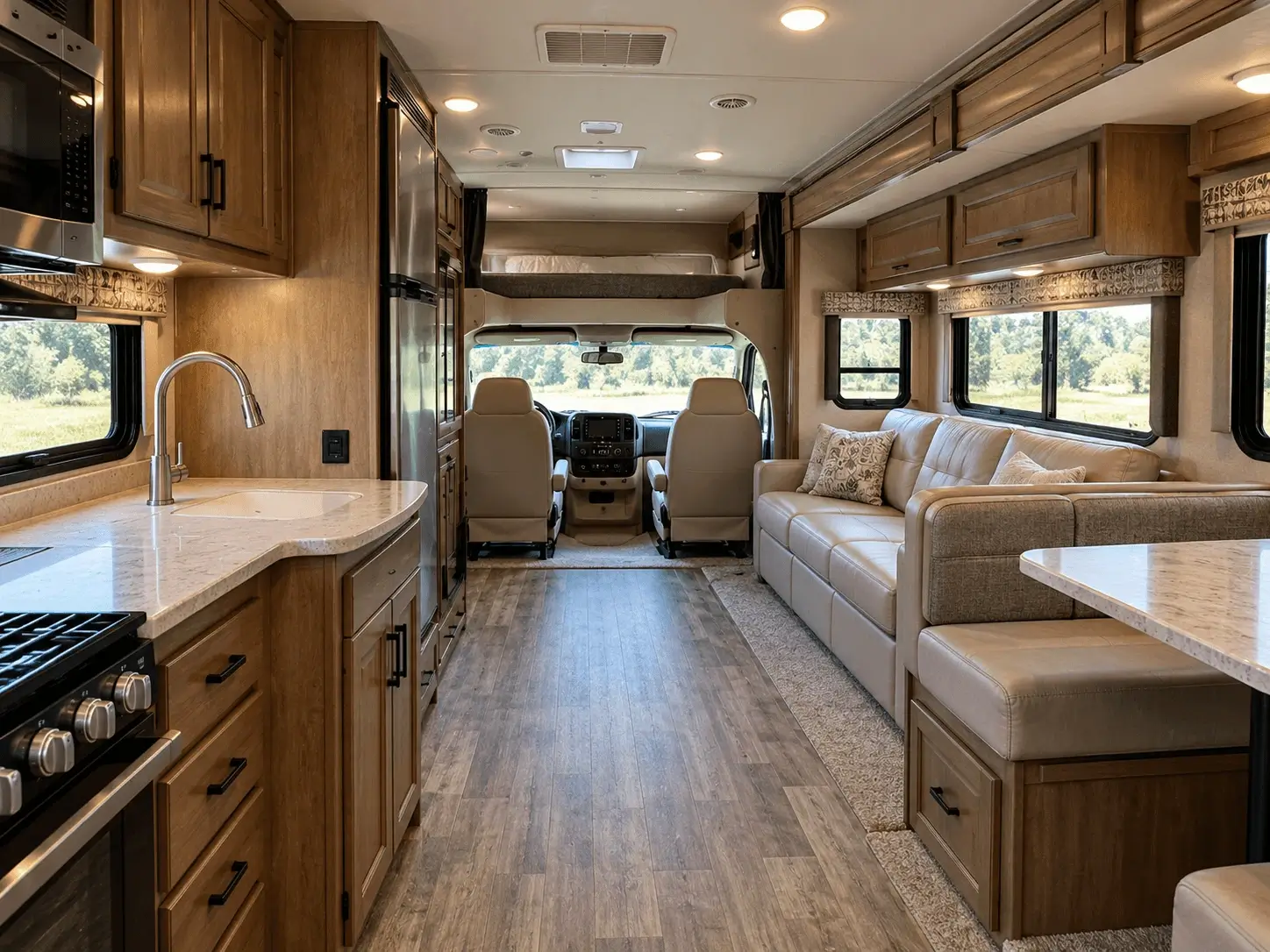
A Class C Motorhome With Service Records
The owner knows the mileage, has recent maintenance documentation, and can describe whether the engine, transmission, generator, and living-area systems operate. The review can begin with relatively specific information, although the actual condition and ownership details may still require verification.

A Fifth Wheel With an Old Roof Leak
The trailer has a desirable floorplan, but water entered around a roof opening several seasons ago. The important questions are whether the leak was fixed, whether the underlying structure was damaged, and whether moisture remains. A clean interior photograph alone cannot resolve those questions.

A Class A Motorhome Stored for Several Years
The owner has not started or moved the coach recently. Its odometer reading is useful, but it does not establish whether the engine, fuel system, tires, brakes, batteries, or other components are ready for use. The owner should describe the storage period and what has actually been tested. There is no need to attempt an unsafe test drive.
These examples are illustrative situations, not customer transactions or promises of a particular valuation.
Check These Areas Before Submitting Your RV Details
A short inspection from safe, accessible areas can help you prepare an accurate description.
You do not need professional inspection equipment or a fully repaired RV to begin.
Exterior and Weather Exposure
- Look for visible roof-edge or window-seal damage from accessible positions.
- Check for stains, bulges, cracks, loose trim, and signs of water intrusion.
- Note known storm damage, collision damage, or previous exterior repairs.
- Avoid climbing on the roof or entering an unsafe structure just to complete the form.
Floors and Interior
- Note any soft or uneven flooring.
- Identify stains, persistent damp odors, or visible wall deterioration.
- Describe damaged furniture, cabinetry, or interior fixtures.
- Distinguish ordinary use from major deterioration.
Slide-Outs and Installed Systems
- Report known slide-out movement or seal problems.
- Identify appliances or electrical systems that are not working.
- If equipment has not been tested, mark it as untested.
- Do not operate damaged equipment merely to confirm whether it works.
Mechanical and Towing Components
For motorhomes, report starting, running, driving, and known mechanical problems separately. A motorhome that starts is not necessarily safe to drive.
For towable RVs, note concerns involving tires, axles, brakes, suspension, landing gear, or hitch components.
Helpful Photographs
Current photographs of the exterior, interior, and known damage can provide useful context.
For motorhomes, an odometer photograph may also help. A model label or other identifying information can be supplied when appropriate.
Avoid uploading unnecessary personal documents or sensitive identification photographs through an unverified form.
Accurate descriptions make an RV inquiry more useful than an optimistic condition label with no supporting details.
Motorhomes and Towable RVs Are Not Evaluated the Same Way
Different RV designs create different ownership and maintenance considerations.
Motorized RVs
Class A motorhomes: Chassis, engine and transmission condition, coach systems, large slide-outs, generators, leveling equipment, and maintenance history may all be relevant.
Class B camper vans: Van mileage and mechanical history are considered alongside the conversion, electrical equipment, plumbing, and compact interior systems.
Class C motorhomes: Drivetrain condition, house systems, exterior joints, roof transitions, and any over-cab construction concerns may need attention.
Towable RVs
Travel trailers: Structural integrity, roofing, axle and brake systems, interior equipment, and any history of water intrusion are important details.
Fifth wheels: The review may also consider landing gear, slide-outs, the kingpin and hitch-related components, and how the trailer is situated.
Toy haulers: Cargo-area condition, ramp door operation, floor loading areas, and specialized equipment can add questions beyond those for a conventional trailer.
Smaller and Specialty RVs
Pop-up campers: Folding mechanisms, roof condition, fabric or soft-side materials, and seals can be important.
Truck campers: Mounting and support areas, camper jacks, structural condition, and installed living systems may require attention.
Other RV configurations may be considered after their exact type and characteristics are clarified. An inquiry is not an automatic purchase approval.
THREE CLEAR STEPS
How the RV Value Review Works
Step 1 – Tell Us What You Own
Complete the RV evaluation form with the year, make, model, type, location, and relevant operating information.
You can also describe existing damage, recent repairs, or anything you are unsure about.
Step 2 – Your Information Is Reviewed
The details help determine whether the RV may be suitable for a purchase evaluation.
Additional questions or supporting information may be necessary. A form submission alone does not establish a guaranteed value or purchase price.
This service is a potential direct-purchase evaluation, not a certified third-party appraisal.
Step 3 – Consider Any Proposed Offer
If an offer is made, review the amount and the applicable terms before deciding whether to proceed.
You are not required to accept an offer.
If a purchase is agreed upon, free towing is included. Ownership documentation, accessibility, and pickup arrangements must be addressed as part of the transaction.
Learn more in Our RV Buying Process.
REPAIR DECISIONS
Should You Repair Your RV Before Requesting a Value?
Not necessarily. The useful decision is whether the expected benefit of repairing the RV justifies the expense, effort, and uncertainty.
A small, well-documented repair may make an RV easier to describe or present. Major work, such as replacing deteriorated flooring or resolving significant drivetrain problems, may require substantial expenditure.
Before you authorize repairs
There is no assurance that a buyer will increase an offer by the amount you spend on a repair.
Before approving costly work, consider the repair estimate, the current condition of the RV, available comparable listings, and the selling option you intend to pursue.
You can submit an inquiry about an RV that needs repairs. Describe the known issues clearly. Individual purchase eligibility will depend on the specific RV.
CONDITION IS NOT BINARY
What If the RV Doesn’t Run or Has Been Sitting in Storage?
The distinction between not running, not currently tested, and unsafe to move matters.
A motorhome with a confirmed engine problem is not the same as one whose battery is discharged after long storage. Neither should automatically be described as roadworthy.
What to describe
For a trailer, extended storage can raise questions about tires, brakes, seals, moisture exposure, and whether it can be moved safely.
Tell us what you know and when the RV was last used. Avoid operating or moving equipment that may be unsafe.
A value request does not include a standalone free removal service. Free towing applies when a purchase has been agreed upon.
TITLE AND LIEN QUESTIONS
What If You Still Owe Money on the RV?
An outstanding loan does not prevent you from asking about your RV’s potential purchase value.
However, the loan balance and the RV’s value are separate figures. Completing a sale may require an accurate payoff amount, lender involvement, and appropriate title-transfer arrangements.
Before ownership can transfer
If the amount owed exceeds a possible sale price, that difference may need to be resolved before a transaction can proceed.
Title requirements and lien procedures vary by state and situation. Do not assume that a sale can be completed without satisfying applicable ownership requirements.
For a question about your particular paperwork, Contact QuickRVBuyer.
BEYOND THE DOLLAR FIGURE
How to Compare an RV Purchase Offer
An offer should be evaluated as more than a single dollar figure.
Before making a decision, make sure you understand:
The amount
What is actually being offered for the RV?
Any conditions
Is the proposal subject to inspection, document verification, or other requirements?
Transportation
Who will arrange and pay for moving the RV?
Ownership documents
Which title, identification, or lien-release documents are needed?
Payment arrangements
How and when would payment be made if the transaction proceeds?
A private listing may provide a different potential sale outcome, but it can also require advertising, conversations with buyers, viewings, negotiations, and transaction coordination.
A direct purchase may suit an owner who prefers a different process. Neither option is automatically best for every RV or every seller.
QuickRVBuyer’s commitment to free towing applies to agreed purchases. Other proposed terms should be reviewed before acceptance.
YOUR QUESTIONS, ANSWERED
Frequently Asked Questions About RV Values
Clear answers about value estimates, condition concerns, offers, ownership, and towing.
RV values and condition
Offers and ownership
Request an RV Value Review Based on Your Actual RV
You do not have to rely on a generic asking price or guess what an unfamiliar buyer might pay.
Share the details you know about your RV – its exact model, condition, known issues, and location – and request a purchase evaluation.
If an offer is made, you can consider the terms without any obligation to accept.
For further information, visit About QuickRVBuyer or our RV Selling FAQs.